Couch Cinema: Seven Clues Your Movie Was Made for the Living Room
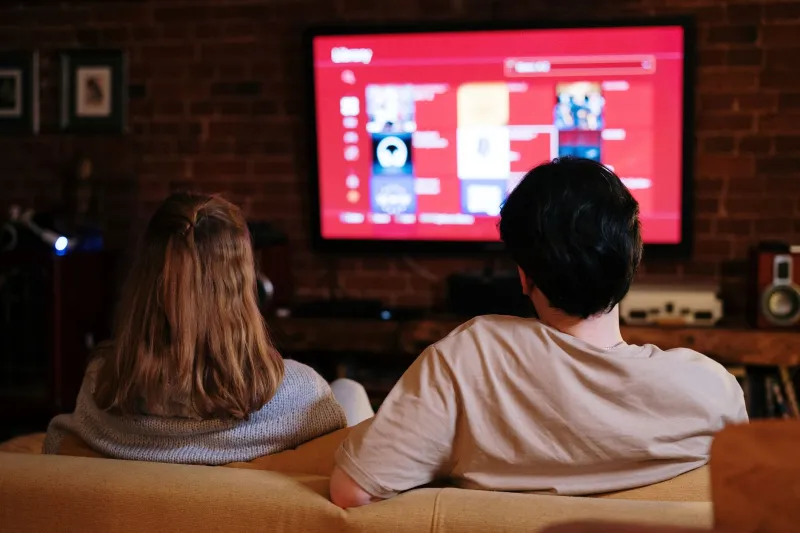
You sit down, press play, and something feels off. Not bad, exactly. Just different. The movie is well-made, the actors are famous, the plot is moving. And yet it feels like it was built for the room you are sitting in rather than the one you drove to. That is not your imagination. In 2026, more movies are being designed for the living room, and the clues are baked into the craft.
Some of these choices are practical. Some are aesthetic. Some are just the result of how movies get made when a streamer is paying the bills and the audience is expected to watch at home, on a laptop, or on a plane. Here are seven tiny details that give it away.
1. The Sound Mix Is Polite
The first giveaway is often the quietest. A theater movie is mixed for a big room, which means big dynamic swings: whispers you have to lean into, explosions that rattle the seats. A streaming movie is mixed for a living room, which means the dialogue stays front and center and the loud parts do not get too loud. You can hear every line without cranking the volume. That is convenient at home. It is also a tell.
2. The Lighting Has No Secrets
Theatrical films often use shadows to create depth. Streaming films often use flatter, brighter lighting so the image survives a smaller screen, a window reflection, or a less-than-perfect TV setting. The result can look clean and polished, but it rarely looks mysterious. If every face is evenly lit and every corner is visible, the movie may be optimizing for your couch rather than a darkened auditorium.
3. The Frame Is Close and Cozy
Wide shots are expensive to fill and harder to read on a phone. Streaming movies tend to favor medium shots and close-ups, keeping the action legible even when the screen is small. That is not a flaw by itself. But when a film rarely pulls back, it can feel less like a world and more like a conversation. The camera stays close because the audience might be close too.
4. The Cast Feels Like a Dinner Party
A theater movie can afford a huge ensemble because the big screen gives everyone room. A streaming movie often keeps the cast tight and recognizable, with a few familiar faces doing the heavy lifting. That is partly budget, partly attention. At home, viewers scroll. A movie designed for streaming wants to give them a reason to stay, and familiar actors are one of the fastest ways to do it.
5. Scenes End Before They Breathe
Watch how long a scene lingers. Theater movies often let a moment sit, because the audience is captive and the big screen rewards patience. Streaming movies tend to move faster, cutting before a scene can get uncomfortable or slow. That pacing is not always bad. But when every scene ends on a neat beat, it can feel like the movie is afraid you will reach for your phone.
6. The Production Design Is Recognizable
A streaming movie often takes place in spaces you already know: a nice apartment, a sleek office, a trendy restaurant, a suburban house with great light. That is not just a budget choice. Recognizable settings help a movie play well on a small screen, where detailed world-building can get lost. The downside is that the movie can feel generic. The upside is that it feels immediate. Either way, it is a clue.
7. The Movie Opens Like a Pilot
Many streaming films front-load the hook. The first five minutes are designed to grab you before the credits even settle, because the platform knows the drop-off risk is real. That can make for a great opening. It can also make the rest of the movie feel like it is chasing the energy of the first scene. A theatrical film can afford a slow burn. A streaming film often cannot.
What the Giveaways Do Not Mean
None of this means a streaming movie is automatically worse. Plenty of great films are made for the living room, and plenty of theatrical films are forgettable. The point is not that one format is superior. The point is that the format leaves fingerprints. Once you notice them, you cannot unsee them — the polite mix, the flat light, the close frame, the fast cuts, the familiar faces, the recognizable rooms, the pilot-style opening.
In 2026, Hollywood is not just making movies. It is making movies for the way we actually watch. Sometimes that means a theater. Sometimes it means a couch. The best filmmakers know the difference and use it. The rest just hope you do not notice.