Is That Really Them? The Deepfake Crisis Quietly Unraveling Celebrity Culture
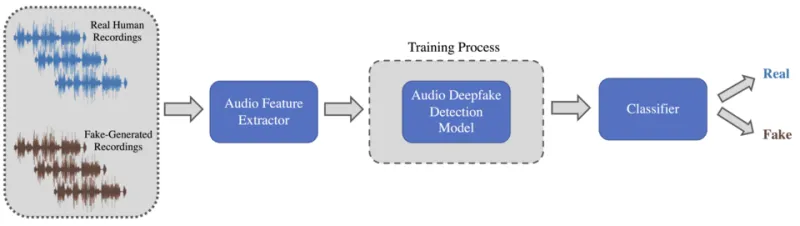
Photo: Antonelse, CC BY-SA 4.0, via Wikimedia Commons
Scroll through your feed on any given Tuesday and you'll probably spot something that stops you cold — a video of a famous actor endorsing a crypto scheme, a clip of a pop star saying something wildly out of character, or a snippet of a beloved comedian doing an interview they never actually gave. Your brain tells you it looks real. Your gut says something's off. Welcome to the deepfake era, where synthetic media has officially become entertainment's most uncomfortable new reality.
We're not talking about clunky, obviously fake stuff anymore. The technology has matured at a pace that's outrun almost every safeguard the industry has tried to throw at it. And the consequences — for celebrities, for fans, and for the broader culture of entertainment itself — are only beginning to surface.
The Technology Got Scary Good, Fast
For a while, deepfakes had a tell. A weird shimmer around the hairline. Eyes that didn't quite blink right. Lips that moved a half-beat off from the audio. Those days are largely gone.
Modern AI video synthesis tools — some of them freely available online — can generate convincing face-swaps and voice clones in a matter of hours, sometimes minutes. Researchers at institutions like MIT and Stanford have been sounding alarms about detection gaps for years, but public awareness has lagged way behind the actual threat level. The result? Millions of Americans are regularly consuming fabricated content without any idea it's not real.
In 2023 and into 2024, a wave of AI-generated celebrity endorsement scams swept through social media platforms. Fake videos of figures like Taylor Swift, Tom Hanks, and Oprah Winfrey were used to promote everything from sketchy giveaways to outright financial fraud. Hanks himself took to Instagram to warn fans directly — a surreal moment where a real person had to publicly prove their own authenticity. That's the world we're living in now.
What It Does to Celebrity Reputation
For public figures, the damage from a convincing deepfake can be immediate and lasting. Even after a video is debunked, the emotional imprint it leaves on audiences doesn't just disappear. There's a psychological phenomenon researchers call the "illusory truth effect" — basically, the more we're exposed to something, even something false, the more believable it starts to feel over time.
That's a nightmare scenario for any celebrity's PR team. A fabricated clip of a star making a racist remark, for instance, can go viral in hours and rack up millions of views before platforms even flag it. By the time a correction goes out, the narrative has already taken root in corners of the internet that corrections never reach.
Less obvious but equally damaging is what this does to fan culture. Fandoms are built on intimacy — the sense that you know your favorite artist or actor in some real way. Deepfakes corrode that foundation. When you can't trust that the content you're watching is genuine, the parasocial relationships that power so much of modern celebrity culture start to feel hollow. And for an entertainment industry that runs on audience investment, that hollowness is a serious problem.
The Legal Gray Zone Nobody Wants to Talk About
Here's where things get genuinely complicated. US law hasn't caught up with the technology, and the patchwork of protections that do exist varies wildly by state.
Some states have passed legislation targeting non-consensual deepfake pornography — a particularly vicious use of the technology that has victimized numerous female celebrities. California and Texas have laws on the books specifically addressing political deepfakes. But a comprehensive federal framework? Still largely absent. The NO FAKES Act, proposed legislation that would establish nationwide rights around AI-generated likenesses, has been discussed in Congress but hasn't crossed the finish line as of this writing.
In the meantime, celebrities and their legal teams are working with a messy toolkit: right-of-publicity claims, defamation suits, and copyright arguments that don't always translate cleanly to synthetic media. The entertainment industry's major guilds — SAG-AFTRA chief among them — have made AI likeness protections a centerpiece of recent labor negotiations, which tells you everything about how seriously working actors and performers are taking this threat.
What Platforms Are (and Aren't) Doing
Meta, YouTube, TikTok, and X have all rolled out policies requiring disclosure when AI-generated content features real people. In practice, enforcement is inconsistent at best. Detection tools exist, but they're in an arms race with the generative technology itself — every time a detector improves, the synthesis tools adapt.
Some entertainment companies are taking matters into their own hands. Studios are exploring digital watermarking and content authentication standards through initiatives like the Coalition for Content Provenance and Authenticity (C2PA), which embeds verifiable metadata into media files. It's promising, but adoption across the broader internet is still limited.
What You Can Actually Do About It
For regular fans and viewers, the practical advice is frustratingly basic: slow down before you share. If a video feels designed to provoke a strong emotional reaction — outrage, excitement, disbelief — that's your cue to pause and verify. Check whether the content is being reported by actual news outlets. Look for the original source. Tools like Google's reverse image search and emerging deepfake detection apps (Sensity AI, for example) can help, though they're not foolproof.
For creators and public figures, the calculus is different. Proactively establishing a verified digital presence, being transparent with audiences about what content you actually produce, and working with platforms to authenticate official channels are all becoming less optional by the day.
The deeper issue, though, is cultural. We built an entertainment ecosystem on the idea that seeing is believing — that a video of someone doing or saying something is evidence that it happened. That assumption is no longer safe. Learning to exist in a media landscape where visual proof isn't proof anymore is genuinely new territory for all of us, and figuring out how to navigate it together is going to take a lot more than a platform policy update.