Trash Is the New Treasure: How 'Bad' TV Became the Coolest Thing on Your Watch List
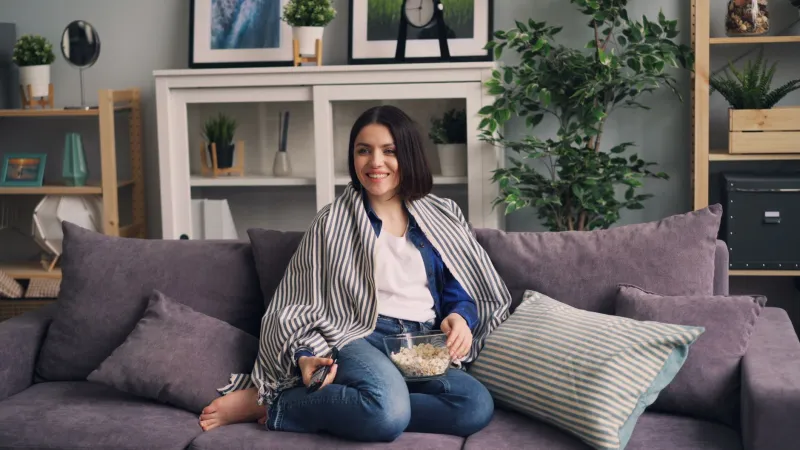
There was a time — not that long ago, honestly — when admitting you watched reality TV in polite company felt roughly equivalent to confessing you ate cereal for dinner three nights running. You'd lower your voice. You'd add a disclaimer. "I know it's terrible, but..." The apology came before the admission, every single time.
That time is over.
Something has quietly flipped in the cultural conversation around entertainment, and if you've been paying attention, you've probably felt it. The people who used to lord their prestige viewing habits over everyone else at brunch — the ones who only watched critically acclaimed limited series and referenced showrunners by name — are looking a little out of touch these days. Meanwhile, the person who spent their entire weekend watching strangers argue over roses or compete in increasingly unhinged cooking challenges? They're having the better time. And everyone kind of knows it.
The Prestige Bubble and Why It Started Leaking
For a solid decade, American TV culture was obsessed with the idea of "elevated" television. The prestige drama era gave us genuinely brilliant work — nobody's arguing that. But somewhere along the way, the watching of prestige TV became its own performance. It wasn't enough to enjoy a show. You had to enjoy the right show, discuss it with the correct level of intellectual seriousness, and signal to everyone around you that your taste was, in fact, impeccable.
Exhausting doesn't even cover it.
The problem with performing sophistication is that it eventually collapses under its own weight. When watching TV starts to feel like homework — when you're anxious about whether you're appreciating something correctly — the whole point of entertainment goes out the window. People got tired. And when people get tired of pretending, they tend to swing hard in the opposite direction.
Enter: the golden age of unapologetic trash.
Reality TV's Unlikely Glow-Up
Here's what's fascinating about the current moment: reality TV and dating shows haven't actually gotten better in the traditional sense. The Bachelor franchise is still gloriously chaotic. Bravo's lineup remains a masterclass in manufactured conflict. Competition shows keep finding new ways to be absolutely unhinged. None of that has changed.
What changed is the cultural permission structure around enjoying them.
There's now a genuine social currency attached to being someone who watches Love Is Blind or The Real Housewives without irony — or at least without excessive irony. These shows generate the kind of communal, real-time conversation that prestige dramas almost never manage anymore. When something wild happens on a reality show, everyone knows about it by morning. It's appointment viewing in a way that slow-burn critical darlings simply aren't, no matter how many think-pieces they generate.
That communal energy is powerful. It's fun in a way that feels increasingly rare.
Anti-Pretension as Its Own Kind of Cool
Let's be honest about what's actually happening here: rejecting prestige gatekeeping has become its own status move. The person who loudly declares they'd rather watch a chaotic dating competition than another prestige drama isn't just expressing a preference — they're making a statement about authenticity, accessibility, and refusing to perform taste for an invisible audience.
This is genuinely interesting because it reveals something about how cultural credibility works. Status symbols don't stay static. They shift based on what feels authentic versus what feels like a pose. Right now, the pose is caring deeply about whether your TV consumption signals intelligence. The authenticity is admitting that watching people make terrible decisions in beautiful locations is just fun, and fun doesn't need a defense.
Gen Z, in particular, has been incredibly vocal about this. There's a whole ecosystem of content — TikTok recaps, reaction videos, fan accounts — built entirely around celebrating reality TV without apology. These aren't guilty pleasure confessions. They're enthusiastic, full-throated endorsements. The guilt has been surgically removed.
What This Says About Where We Are Right Now
The shift makes a certain kind of sense when you zoom out and look at the broader cultural climate. People are tired. Like, genuinely, structurally exhausted in ways that go well beyond entertainment choices. The appeal of a show that asks nothing of you intellectually — that exists purely to be entertaining, dramatic, and occasionally completely unhinged — isn't laziness. It's a reasonable human response to a world that demands constant seriousness.
There's also something to be said about honesty. Reality TV, for all its manufactured drama and producer-assisted chaos, presents itself as exactly what it is. It doesn't ask you to find metaphorical depth or thematic resonance. It says: here are some people, here is a situation, watch what happens. That transparency is almost refreshing compared to content that works very hard to seem Important.
And honestly? Some of the sharpest cultural commentary happening right now lives inside "lowbrow" formats. Reality TV has always been a funhouse mirror for American attitudes about love, money, ambition, and social dynamics. You just have to be willing to look.
The New Rules of What's Worth Watching
None of this means prestige television is dead or that critically acclaimed dramas don't deserve their flowers. Great storytelling is great storytelling, full stop. But the cultural hierarchy that once placed serious dramas at the top and reality TV somewhere near the bottom has genuinely crumbled, and it's not coming back.
The new landscape is more honest, if messier. People watch what they actually want to watch, talk openly about it, and have stopped apologizing for finding joy in content that wasn't designed to win awards. That's a healthier relationship with entertainment than the alternative — sitting through six episodes of something you find relentlessly grim because you feel like you should be watching it.
At the end of the day, the best thing you can watch is whatever makes you feel something real — whether that's devastated by a finale, intellectually challenged by a complex narrative, or absolutely losing your mind because someone on a dating show just did that.
All three are valid. One of them just happens to be a lot more fun to talk about at brunch.