Good Enough and Proud of It: The Quiet Revolution of Loving Mainstream Entertainment
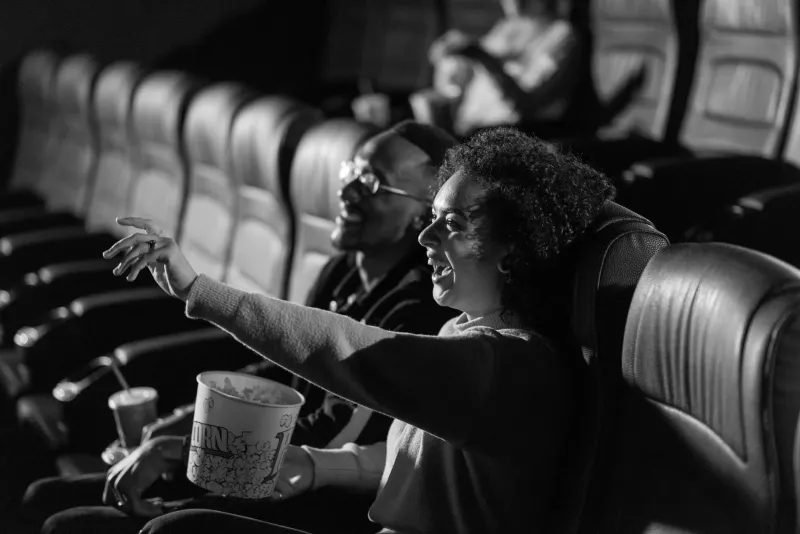
Something strange is happening in American living rooms. People are watching rom-coms, reality dating shows, and feel-good network TV — and they're not apologizing for any of it. No ironic distance. No defensive "I know it's trashy, but..." disclaimer tacked on at the end. Just a glass of wine, a couch, and a completely sincere investment in whether the two leads are going to kiss before the credits roll.
After years of taste policing and prestige TV snobbery, the era of unapologetic middlebrow entertainment is officially here. And honestly? It's kind of a relief.
The Exhaustion of Having Correct Opinions
For roughly a decade, American pop culture operated under an unspoken set of rules. You were supposed to love prestige dramas. You were supposed to have seen the right films at the right festivals. You were supposed to be able to explain, in some detail, why the cinematography in a three-hour slow-burn foreign film was actually doing something the mainstream couldn't touch.
That's a lot of homework just to have a conversation at a dinner party.
"There's been this performance of sophistication that's exhausting for everyone involved," says cultural critic and podcast host Dana Reyes, who covers media consumption trends. "At some point, talking about what you actually enjoy became almost an act of bravery."
She's not wrong. The rise of social media created a kind of permanent audience for your taste. Your Letterboxd reviews, your Spotify Wrapped, your public watchlist — all of it quietly communicated who you were and whether you were worth taking seriously. Loving something uncomplicated, something without layers to unpack, felt like admitting defeat.
But somewhere along the way, people got tired. And when people get tired of performing, they start being honest.
The Rom-Com Resurgence Nobody Predicted
Look at what's actually pulling numbers right now. Romantic comedies — a genre that critics spent the early 2010s cheerfully eulogizing — are not just surviving but thriving. Netflix originals in the genre regularly dominate viewing charts. Amazon and Hulu are commissioning more of them. Studios that once abandoned the format entirely are quietly green-lighting projects again.
And the audience isn't watching these films ironically. They're watching them because they want to feel something warm and uncomplicated for two hours. Because the ending is going to be happy. Because the stakes are low and the payoff is guaranteed.
"I watched a ridiculous amount of rom-coms last winter," admits Marcus Chen, a 31-year-old software developer from Chicago. "And I told everyone about it. I didn't pretend I was doing it ironically. I just... needed them. They made me feel okay."
That shift — from guilty pleasure to genuine pleasure — is the defining move of this cultural moment. The guilt is gone. What's left is just the pleasure.
Reality TV Gets Its Flowers
The rehabilitation of reality dating shows has been even more dramatic. For years, Love Island, The Bachelor franchise, and shows like Love Is Blind occupied a cultural space somewhere between embarrassing confession and social media spectacle. You watched, but you framed it as anthropology. You were studying something, not enjoying it.
Now? People are throwing watch parties. They're making TikToks breaking down the emotional arcs of contestants with the same analytical energy once reserved for prestige drama recaps. They're writing long-form essays about what these shows reveal about modern intimacy, yes — but they're also just genuinely rooting for people to find love in a weird manufactured environment on television.
"Reality TV was always doing more emotional heavy lifting than critics wanted to admit," says Dr. Priya Nair, a media studies professor at the University of Southern California. "What's changed is that audiences no longer need critics to validate what they're feeling. They trust their own responses."
That's a significant cultural shift. For a long time, critical validation was the currency that moved something from "guilty pleasure" to "legitimate entertainment." Now audiences are minting their own currency.
The Anti-Gatekeeping Generation
It's worth noting who's leading this charge. Younger audiences — particularly millennials hitting their mid-thirties and Gen Z coming into their own as cultural consumers — seem especially resistant to taste hierarchies. They grew up watching everything simultaneously: prestige cable dramas alongside YouTube creators alongside reality TV alongside anime. The idea that these things exist in a ranked hierarchy of worthiness doesn't map onto how they actually experience media.
"I love Succession and I love Love Is Blind and I love a completely absurd Hallmark Christmas movie," says Jess Morales, a 27-year-old from Austin. "Those things coexist in my brain without any contradiction. I don't need them to be ranked."
This is the core logic of the middlebrow revival: not that prestige entertainment is bad, but that the ranking system itself is the problem. Entertainment doesn't need to be difficult to be valuable. It doesn't need to challenge you to be worth your time. Sometimes the point is just that it makes you feel something — happy, comforted, excited, seen — and that's enough.
What Creators Are Noticing
Filmmakers and showrunners are picking up on the shift. There's a growing willingness among creators to make things that are openly, unashamedly accessible — and to talk about that choice without embarrassment.
"I used to feel like I had to justify making something crowd-pleasing," says one TV writer who asked to remain anonymous. "Like I owed people an explanation for why I wasn't making something harder. Now I feel like accessibility is actually the more interesting creative challenge. How do you make something emotionally true and also just... fun? That's hard. That's real craft."
The critical establishment is slowly catching up, though not without some resistance. More mainstream outlets are reviewing rom-coms with genuine seriousness. Reality TV recaps have become a legitimate journalistic format. The Emmys have started acknowledging genres they once treated as beneath consideration.
The Radical Act of Enjoying Things
Maybe the most interesting thing about this moment is what it says about authenticity. We live in an era of relentless personal branding, where everything you consume is a signal about who you are. Choosing to love something uncool — something that doesn't make you seem sophisticated or interesting — is actually a pretty radical move.
It's saying: I'm not performing for you. I'm just watching TV.
In an attention economy built on curation and impression management, that kind of honesty cuts through. And it turns out a lot of people are hungry for it.
Good enough, it seems, is finally good enough. And that's genuinely exciting.